Small nudges, big changes; supporting patients through changing eating habits
by Ellen Hart, LiveLighter Campaign Senior Coordinator, Dr Andrea Nathan, LiveLighter Research Associate
- June 13, 2025
- Leave a comment

It’s 7am, the coffee machine switches on and begins to warm up, my cue that the day is beginning. I check my phone (and see that I snoozed the alarm twice), drink some water and have a stretch before heading for the beckoning coffee machine.
That’s five habits completed automatically, before I’ve even properly woken up. Some were intentionally created, i.e. having a glass of water on my bedside table before I go to bed and stretching; some are driven by subconscious physiological or psychological responses, i.e. snoozing my alarm, checking my phone and stumbling towards the coffee machine.
And changing them? That’s hard.
Why changing habits is so tough
Creating and changing habits is challenging for everyone. There are multiple conscious and subconscious processes that go into forming our habits in the first place and then maintaining them. When it comes to our eating habits we also contend with genes, culture, physiology (which can change day to day), finances etc. not to mention the environment we live in that doesn’t support us to eat well.
So, how can you, as a health professional, support clients to sustainably shift unhelpful habits towards more healthy ones? Your guidance and advice is vital in helping people improve their health; however it’s important to balance this with encouraging people to drive their own change. It starts with empathy, realistic goals and a few practical tools.
Three principles to guide habit change
- Start small: Focus on achievable, realistic changes which your clients can make. Small wins build confidence.
- Acknowledge difficulty: Changing eating behaviours is HARD; acknowledge this and support people through the challenges that will arise.
- Let clients lead: Allowing people to have agency means they are more likely to feel confident about the strategies chosen.
 Photo by RDNE Stock project on Pexels
Tools to support change
There are many approaches for changing behaviour (and there’s an app that lists them all!) but below we have shared a few tools that we’ve found effective:
- SMART goal setting
- Elevated pros and cons list
- Setting up the environment to enable behaviour change
- Linking a new behaviour with an established one
- Accountability buddy
- Tracking positive results
- Reinforcement through reward
Setting effective goals
Setting goals collaboratively is an effective way to initiate and maintain nutrition and movement changes.
SMART goal setting
Use the SMART acronym to help guide people through the process of goal-setting. Make the goal
Specific: Have a well-defined goal in mind. For example, “drink half the number of sugary drinks” is more specific than “eat better”.
Measurable: Make it measurable so they will know when they have achieved it. For example, “Eat takeaway only once per week” is measurable, but “eat less takeaway foods” isn’t.
Achievable: Encourage people to be realistic about what they can do. It’s better to set small goals and build on these over time rather than setting a goal that is too far out of someone’s reach.
Relevant: Will this goal make your client healthier and happier? Does it fit in with their lifestyle and the things that are important to them?
Timely: Encourage people to put a date on their goal. For example, “At the start of July begin a running program. Be able to run 3km without stopping by the end of August”.

Photo by Mikhail Nilov on Pexels
Elevated pros and cons list
Once your client has a goal in mind they can explore how manageable that goal is for them right now using a ‘decisional balance’ tool. It’s basically a list of pros and cons for both making a change and not making a change.
Decisional balance acknowledges that our habits and behaviours (even those that are not health-promoting!) have served us in some way, at some point. It also recognises that our behaviours are influenced by multiple (sometimes competing) needs. For example, at some times in our lives, morning sleep-ins might be more important than morning walks. Down the track, we might be sleeping better or have the chance to go to bed earlier – and morning walks might be back on the cards!
Evaluating goals in this way also helps us start to understand the barriers and enablers to a particular change.
POSITIVES |
NEGATIVES |
|
|---|---|---|
Staying the same
|
1. |
2. |
Making a change
|
4. |
3. |
Planning for change
Who do you want to be?
Eating habits are typically linked to a person’s level of self-control, individual goals and their perception of their identity; for example a person who identifies as a “runner” is more likely to regularly fit running into their schedule than someone who “occasionally goes for a run”. Encourage people to consider the identity they want to inhabit; e.g. “I am a person who cooks dinner at home”

Mitigating barriers and establishing enablers
Identifying what might get in the way of achieving goals and planning for it can be very helpful both from a practical point of view and to help build confidence. Changing a habit is unlikely to be a straight and easy road – in fact, it almost always involves getting off that comfortable and well-worn path and into unknown territory. Equally, identifying the things that will help ease that transition sets someone up for success.
A great way to mitigate barriers and enhance enablers is to shape the environment we spend most of our time in. Governments, building designers and town planners can improve the public’s health using ‘nudge’ strategies; these are small changes to the environment that nudge people towards the healthier choice. For example, having the stairs prominently placed in a building and the lift around the corner. The same principles can be applied to individuals.
Setting up the environment to enable behaviour change
Here are some examples of interventions client’s can set up in their home to help trigger healthier behaviours or dissuade unhealthy behaviours:
Goal: Drink more water/ drink fewer sugary drinks.
Cue: Keep a water bottle next to house keys so they remember to bring water with them when they go out.
Goal: Eat more healthy snacks/ eat fewer unhealthy snacks.
Cue: Organise the pantry and fridge so that healthy snacks are at eye level and treat snacks are less visible or have to be reached for.
Goal: Prepare healthier lunches/ buy lunch less often.
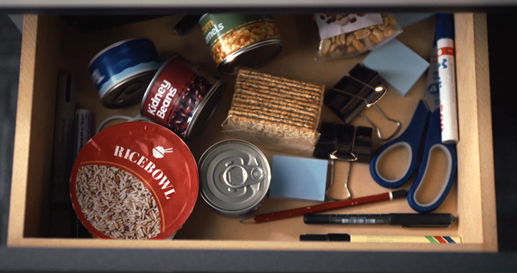
Cue: Have ready to go food prep items in a drawer at work; e.g. packet rice, can of beans/ tuna, almonds, grainy crackers. LiveLighter have a lot of information on this particular topic!
Linking a new behaviour with an established behaviour
This is called an ‘implementation intention’ and can be very useful in enabling behaviours. It is basically linking desired behaviours to existing routines. For example, doing stretches when making tea each day. This helps make the new behaviour automatic. Less thinking means less effort!
Accountability buddy
Have an accountability buddy. Is there someone in your client’s life who can work towards the goal with them? Or keep them accountable? Maybe that’s part of your role?

Maintenance
It’s a few weeks in and that fresh change energy has led to some good habits. Maintaining these good habits will likely be the next challenge for your client. Help them to keep motivated by suggesting they track their positive results and reinforce the change through health-promoting rewards.
Tracking positive results
Encouraging people to keep track of their progress can help them stay engaged in the habit change process. For example, reflecting on whether they reached their goal that week, placing a cross on the calendar or a stone in a jar for every day that they do the new habit. Tracking relevant metrics can also help people to visualise the positive impact that a change is having. When changing dietary patterns, we recommend focusing on intrinsic benefits rather than external appearance.
Changes such as weight loss or muscle gain take a long time and are not going to be possible for some people. It can be de-motivating for someone who feels like they are working hard to not be seeing changes on the scales. You can encourage them to focus on the fact that they are sleeping better, have more energy or their gut symptoms have improved, this can help them push through to continue.
Reinforcement through reward
Positive reinforcement can strengthen the association between the cue and the behaviour, making the habit more robust. For example, when someone has put in place the new habit for a certain number of days, they could treat themselves to a reward. It makes sense for the rewards to be aligned with the goals, so consider making those health-promoting too!

Wrapping up
We hope these evidence-based behaviour change strategies help you to help others. LiveLighter offers practical, evidence-based resources to help support your clients on their health journey. We also have a quarterly newsletter just for health professionals, and a general one to share with your clients.
Join the mailing list here to stay in the loop on our latest campaigns and tools.
Let’s make healthy the new habit—together.