Kitchen equipment basics
by Anne Finch, Accredited Practising Dietitian for LiveLighter
- July 4, 2025
- Leave a comment
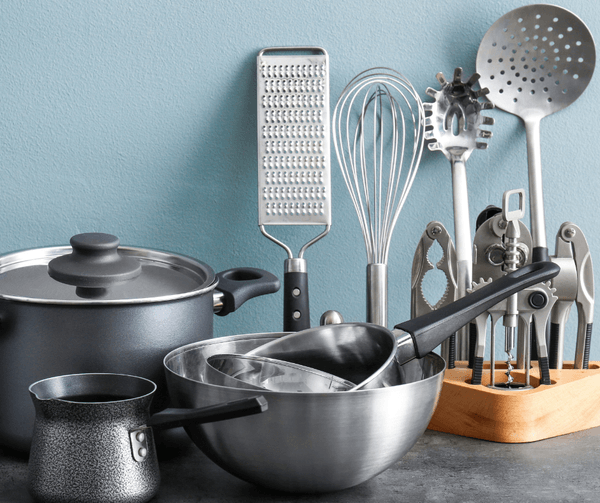
Are you just getting started in a new kitchen or keen to up your cooking game? Here’s an equipment list that covers the basics you’ll need to cover most recipes in the LiveLighter catalogue.
A few tips before you stock up!
- Avoid "sets"
“Sets” of things (like utensils or pots) can seem like good value but usually have more than you need (which you then have to store). Consider “cost per use” rather than “cost per item” and spend a bit more on a few considered pieces. - Avoid second-hand plastic
Second-hand shops are great for many kitchen items but avoid buying second-hand plastic or non-stick items. These break down over time and become unsafe to use, so it’s good to know how old they are and how they’ve been looked after. - Borrow first
If you’re not sure if you’ll get much use out of something, see if you can borrow one to try it out first. - Check your budget
There’s a huge price range for most of these items. Don’t feel like you have to get the best of everything! - Consider cleaning
Choose a simple design that is easy to clean and made of a long-lasting material (like stainless steel or glass). - Be wary of items that only do one job
They’re great if you use them all the time, but many are gimmicky and will end up gathering dust. Sometimes investing in learning a new skill is better than buying a new piece of equipment (I’m looking at you egg-cookers and popcorn makers)!
Food preparation equipment
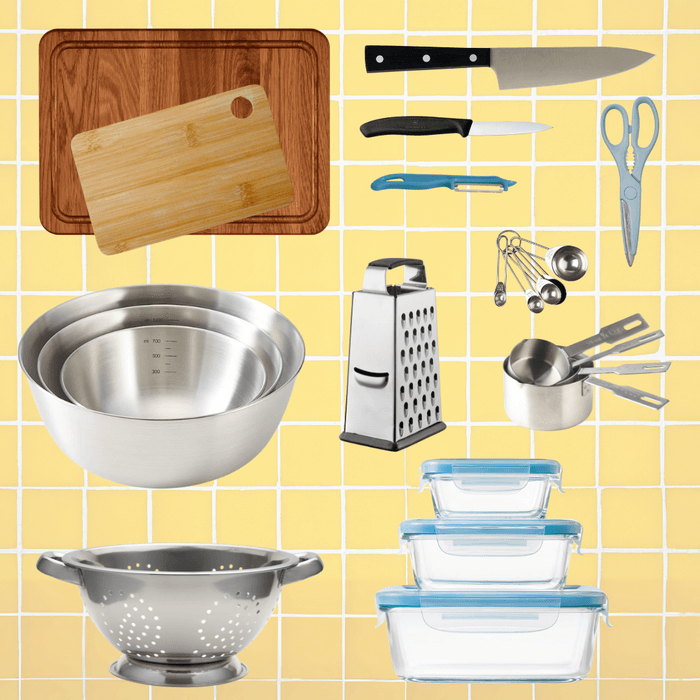
- Chopping board
- At least one big and one small.
- My preferred material is bamboo – They’re light, easy to clean and look good for a long time.
- Wash everything with hot water and detergent and replace when they get worn out or develop grooves that are hard to clean.
- Knives
- One big (chef’s knife size), one small (paring knife size) and perhaps one bread knife (for bread and baked goods but also tomatoes and other juicy fruit and vegetables).
- Sharp knives make cooking so much quicker and easier! Have them professionally sharpened or learn to do it yourself. There are lots of great video-resources online (hint: practice with a cheap knife!).
- This is an essential piece of quality kit. They don’t have to cost much, but they do need to work for you. Take the time to figure out what you like and do a little research to get recommendations at different price points.
- Kitchen scissors. I store them with my knives and they’re not just for opening packets! Cutting pizza and tortillas, cutting up a cooked chicken, snipping herbs or leafy greens, cutting cooked noodles into shorter pieces, trimming fat from raw meat… the list goes on!
- Colander/ strainer/ sieve
- For draining pasta, rinsing vegies and canned beans, sifting and even squeezing the moisture out of vegies for fritters etc.
- I actually have a colander and a sieve – the difference is hole size. If you don’t want both a sieve is probably the more versatile one.
- Grater/s
- I prefer a box grater over a flat one because I find it more sturdy to use, but it does take up more room. Depends how much you grate! Go for one that also has a tiny grater side so you can do zest if you need (or see my faves list about a rasp!)
- Vegie peeler
- I don’t use it very often to peel vegies – I eat potato, carrot and beetroot peels! But I do sometimes use it to make ribbons out of carrots, cucumber, zucchini and hard cheese if I only need a small amount and don’t want to get the grater out.
- Stainless steel bowls
- At least one large and one small. Great for all kinds of things, like putting your prepared ingredients in to make assembling a dish easier, as a salad bowl, to cover meat while resting, or for general mixing or serving.
- Set of measuring cups and spoons
- Stainless steel is great because they will last forever and can go in the dishwasher.
Cooking equipment
- Pots and saucepans
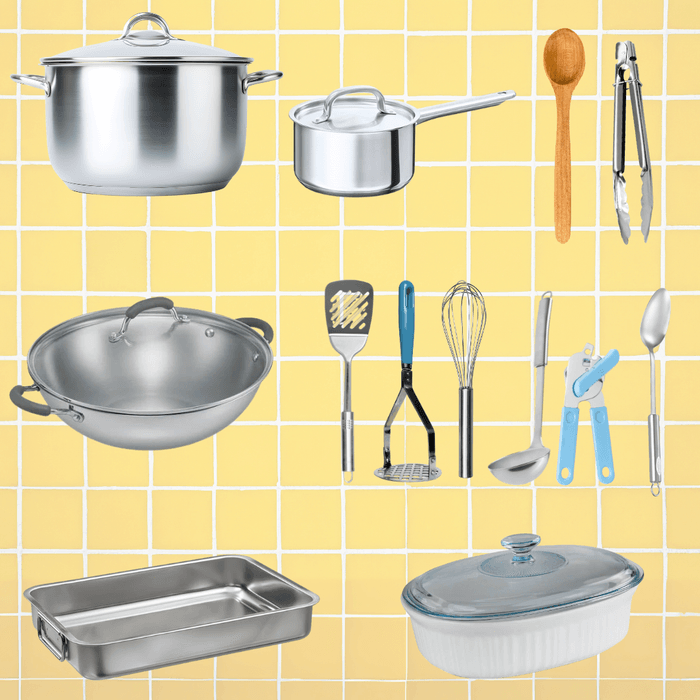
- At least one big and one small. How big and small they are will depend on how many people you usually cook for! Go for at least 5 L in your big pot so you can cook a whole bag of pasta, or make 4-6 serves of soup/ stew.
- Stainless steel is a great option. It lasts a long time and is easy to take care of.
- A additional pot that can go from stovetop to oven is useful too – think enamelled, cast iron or stainless steel.
- Frying pans
- Choose a large frying pan with a lid and high sides. That’s great for foods that start with frying off some of the ingredients and then adding the rest. Dishes like pasta sauce, curry, stew, risotto, noodle stir-fry etc. A wok is a great option for this too!
- This is a piece that will get a lot of use. I’d recommend spending a bit more on this to get one that will last a long time.
- Something oven-safe with no plastic on the handles or lid is very versatile.
- Non-stick pans are easy to use and let you cook foods with less oil – but they need to be replaced regularly as the non-stick coating breaks down. Pans made from cast iron and stainless steel are great, but do require a bit of practice and learning about how to best use them and care for them.
- Utensils
- A wooden spoon or cooking chopsticks
- A serving spoon
- A ladle
- An egg flip/ fish slice
- Tongs
- Whisk
- Can opener
- Masher
- A glass or ceramic casserole dish
- This is good for dishes like lasagna, pot roasts or even nachos!
- Choose one with a lid for more versatility.
- Baking tray
- One with higher sides can also be used as a roasting tray.
- Storage containers in various sizes
- Not technically for cooking, but very useful for storing leftovers and taking lunch to work.
- Some double as oven dishes or serving ware so check out some of those options if you’re short on space.
- Keep a look out at the supermarket as there are some good brands that often go on special there.
Baking extras
- 12-hole muffin pan
- I just got some silicone liners and they are great! They do double-duty as little sauce or herb bowls or to separate foods in lunchboxes.
- Various loaf or cake tins depending on what you like to bake.
- Scales
- It’s much easier to measure accurately using a scale than using cups (also requires less washing up!).
Non-essential but highly valued items in the team kitchen
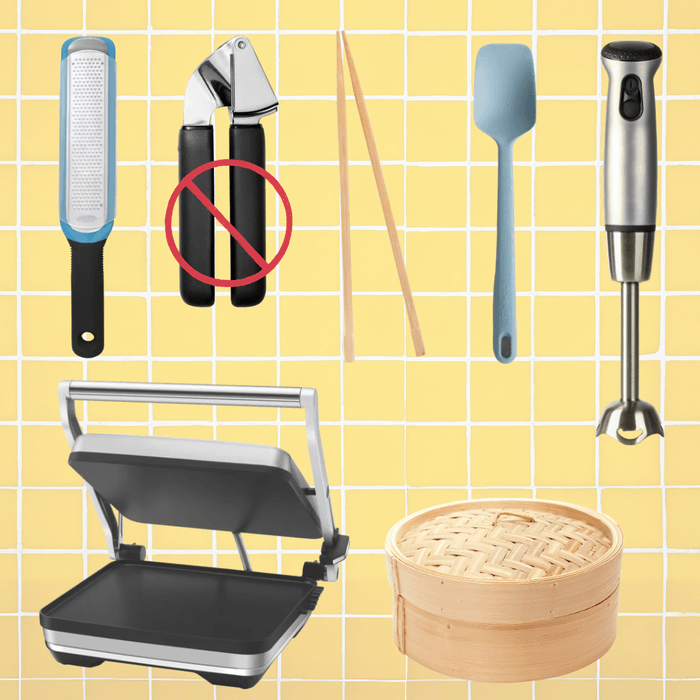
We asked the LiveLighter team what their favourite non-essential kitchen items were.
- A rasp grater (or microplane) for garlic, ginger, parmesan and zest. Not essential but one of my most used items because I use these ingredients a lot! It also replaces the garlic press (which I hate with the fire of a thousand suns but some of our team members use every day!).
- A steamer basket is a great inclusion if you have room and do a lot of steaming! Steaming is a great way to reheat leftovers too if you don’t have a microwave.
- Some kind of joomer/ stick blender with a few different attachments. Immersion blender works for soups and smoothies and the mini food processor is great for dips, pastes and dressings (or to chop a lot of nuts, onions or garlic).
- A rubber or silicone spoon spatula. Great for getting the very last of the yoghurt out of the pot or scraping out the mixing bowl. Can also be used for flipping and mixing on non-stick cookware (which can get scratched if you use metal utensils).
- Sandwich press – not just for pressing sandwiches! I also use it to make toast, grill haloumi and vegie slices, cook fritters and hash browns and even fry an egg if need be.
- Wooden chopsticks are so versatile. They can be used to whisk, stir, and pick things up. Potentially replacing a few utensils if you’re dexterous!
Have we missed anything? We’d love to hear more about your favourite kitchen items that make cooking quicker and easier.